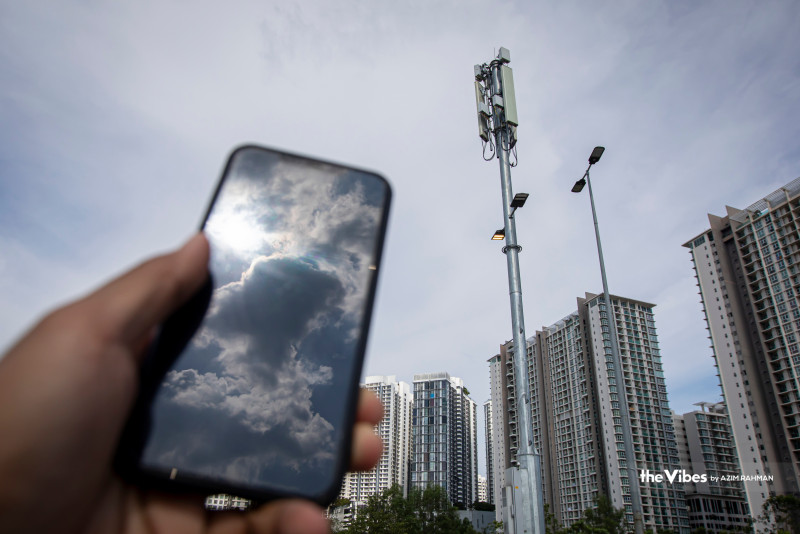
FIFTH-generation mobile technology (5G) is expected to reach 2.9 billion users worldwide by the end of 2025, accounting for nearly one-third of all mobile subscriptions, according to Ericsson’s June 2025 Mobility Report.
The telecommunications firm said 5G networks carried 35 per cent of global mobile traffic as of the end of 2024, and this is forecast to surge to over 80 per cent by 2030.
In Southeast Asia and Oceania, 5G uptake is also gaining ground, with projections estimating around 630 million subscriptions by 2030, making up approximately 49 per cent of all mobile users in the region. Average smartphone data usage is expected to double from 19GB per month in 2024 to 38GB by 2030.
The report also highlighted a continuing global decline in 4G subscriptions, which fell by 55 million in the first quarter of 2025, bringing the total to below 4.9 billion as users increasingly migrate to 5G.
Ericsson’s head for Malaysia, Sri Lanka and Bangladesh, David Hägerbro, emphasised Malaysia’s growing digital momentum through its national 5G rollout.
“Digital Nasional Bhd's intelligent, future-proof network forms the backbone of Malaysia’s 5G-driven growth and digital transformation,” he said.
“It is vital that the momentum continues to grow. Malaysia already has a head start in becoming the leading digital economy in ASEAN and must ensure that its 5G digital infrastructure remains open to an ecosystem that is conducive to global investments and innovation.”
The report further noted that 5G Fixed Wireless Access (FWA) is expected to comprise over 35 per cent of new global broadband connections, with the number of such connections forecast to more than double to 350 million by 2030.
FWA, which uses mobile networks to deliver high-speed broadband, is proving especially important in areas lacking traditional wired infrastructure. Ericsson said more than 90 per cent of the world’s population already resides within mobile network coverage, enabling rapid deployment of broadband via FWA.
“The mix of fibre, 5G FWA and satellite technologies will be crucial in meeting the connectivity needs of an increasingly digital world as we approach 2030,” the report added.
First published in 2011, the Ericsson Mobility Report is regarded as a key industry benchmark for insights into mobile network performance, trends and future projections. - June 26, 2025




.jpeg)




.jpeg)